The Border is an Open Wound
:A Tree Sit in Lochiel, Arizona Halts Border Wall Construction


At the border with Mexico in Arizona, for the first time in history, a tree sit is blocking the construction of the border wall that Trump promised his voters. The wall is the knife of Gloria Anzaldua’s metaphor, when she wrote in 1987:
“The US-Mexican border es una herida abierta where the Third World grates against the first and bleeds.”
The border fence is a knife that cuts through a “living tissue,” as she writes, leaving a ragged wound across the precious and diverse ecosystems that defy the myth that the border represents a natural division between worlds.
Two weeks ago, one protester decided it was time to block the machine that was about to destroy the last of four ancient cottonwood trees that stood in the way of the wall’s construction. A sheriff arrested him; he was released twelve hours later with no charges filed. This arrest galvanized the community.
Less than two days later, friends installed a platform in the tree. Since then, it has been impossible to level this one part of the land because there is someone living in a tree and many supporters on the ground making sure everybody knows it. If the tree is felled, our friend in the tree is likely to be killed along with it. Knowing this, the general contractor, Fisher Sand and Gravel, as well as their private security, Vision Quest, the United States Army, Border Patrol, and the Santa Cruz County Sheriff have not yet been able to remove us from the shade of the old growth cottonwood that has likely stood here since before the land was acquired by the United States.
We invite you to join us in refusing the border regime—whether that means coming here to Lochiel, Arizona or taking action wherever you are. The border is everywhere that their networks of violence extend.
What follows here is an account from within this emerging struggle.
We have been experiencing a moment of relative stillness within a historical eddy. This summer has been full of fleeting conflagrations, weather hotter than we remember last year, and the feeling, never quite departing, that all of this can’t stay as precariously stable as it seems. The stability of the United States project has felt suffocating. We hear whispers of true resistance and see photos of joyful rupture, but our day-to-day lives have largely remained the same, with perhaps a few more friends, commitments, and Signal chats to keep up with than this time last summer.
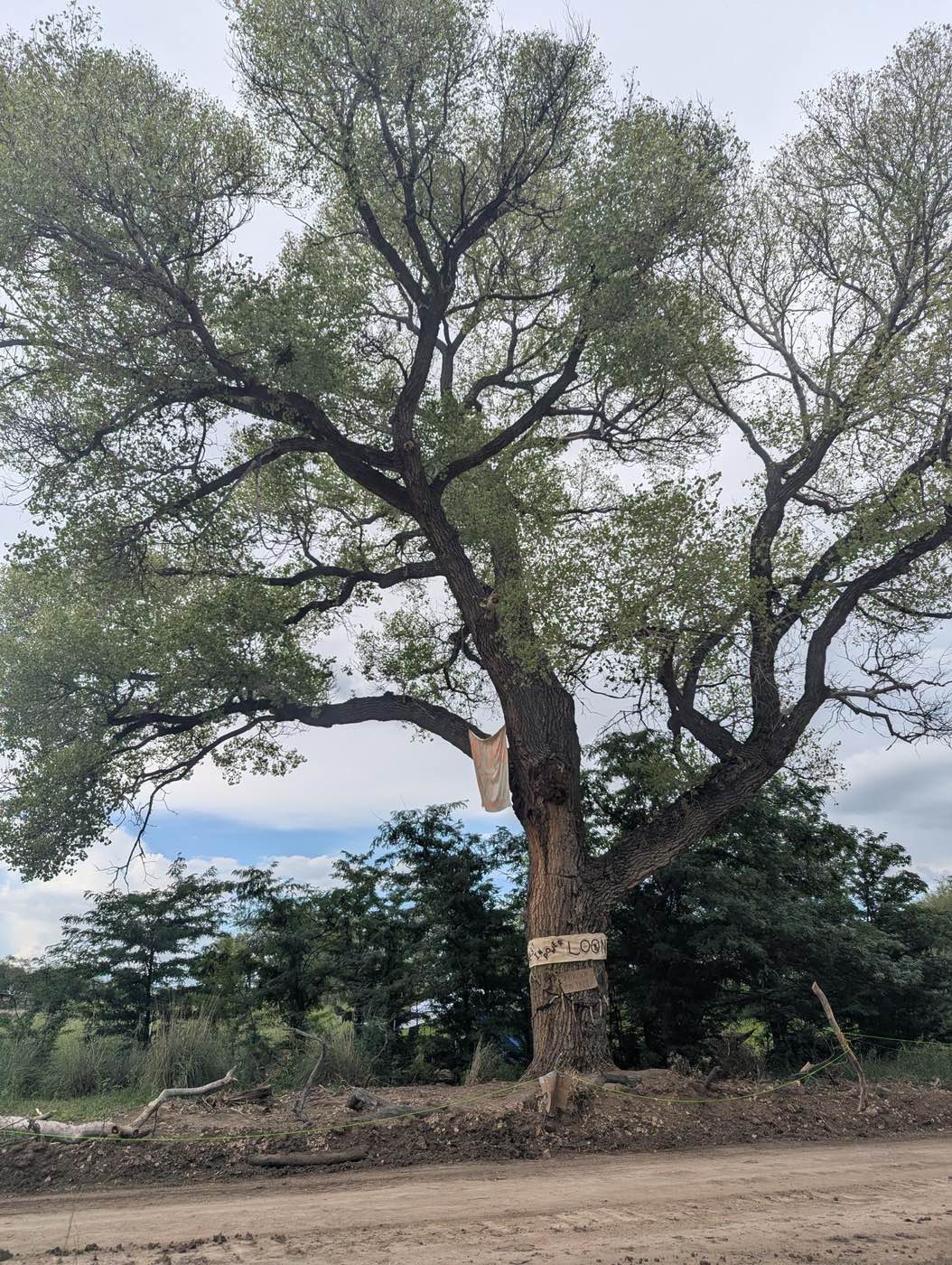
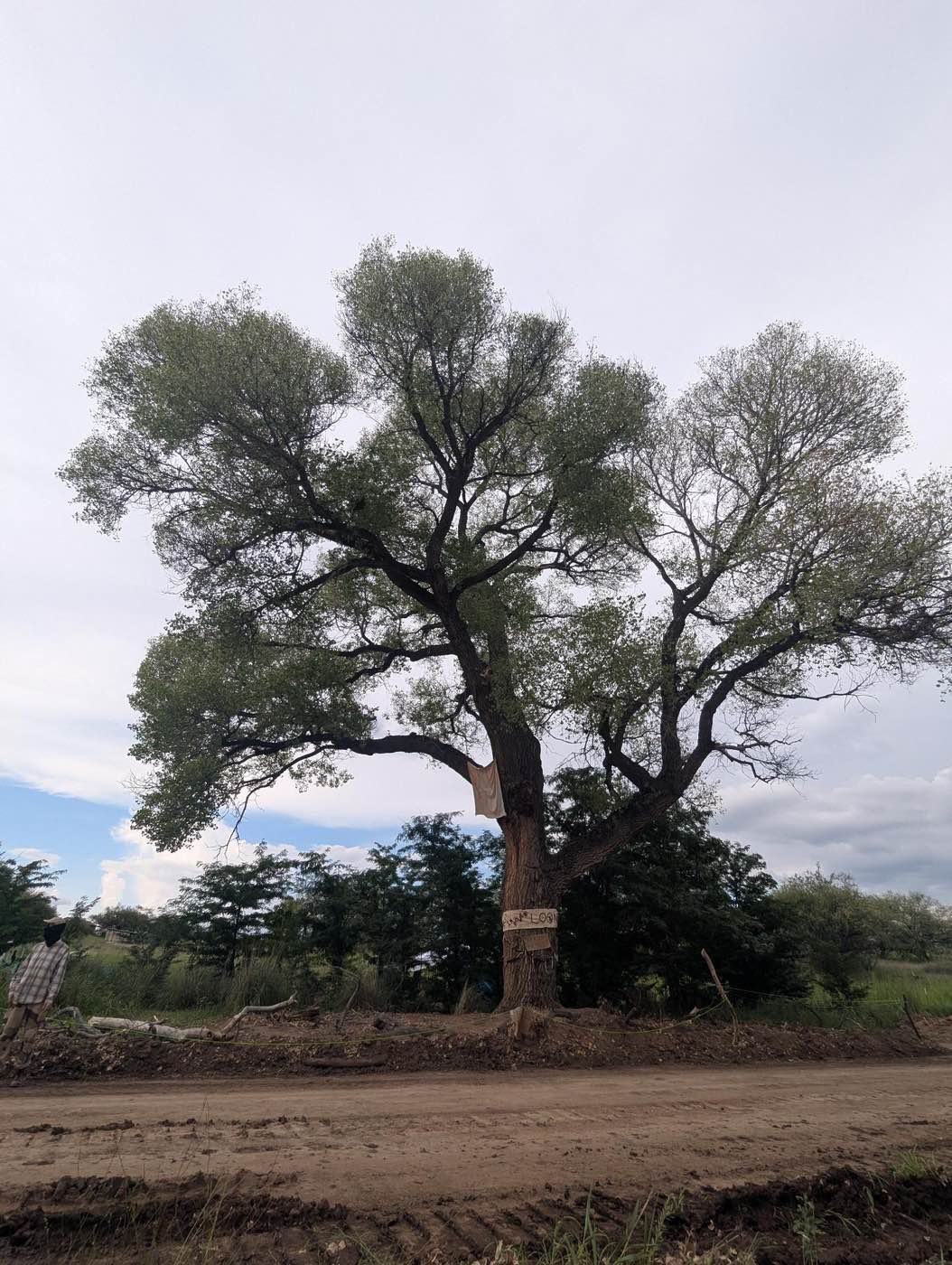
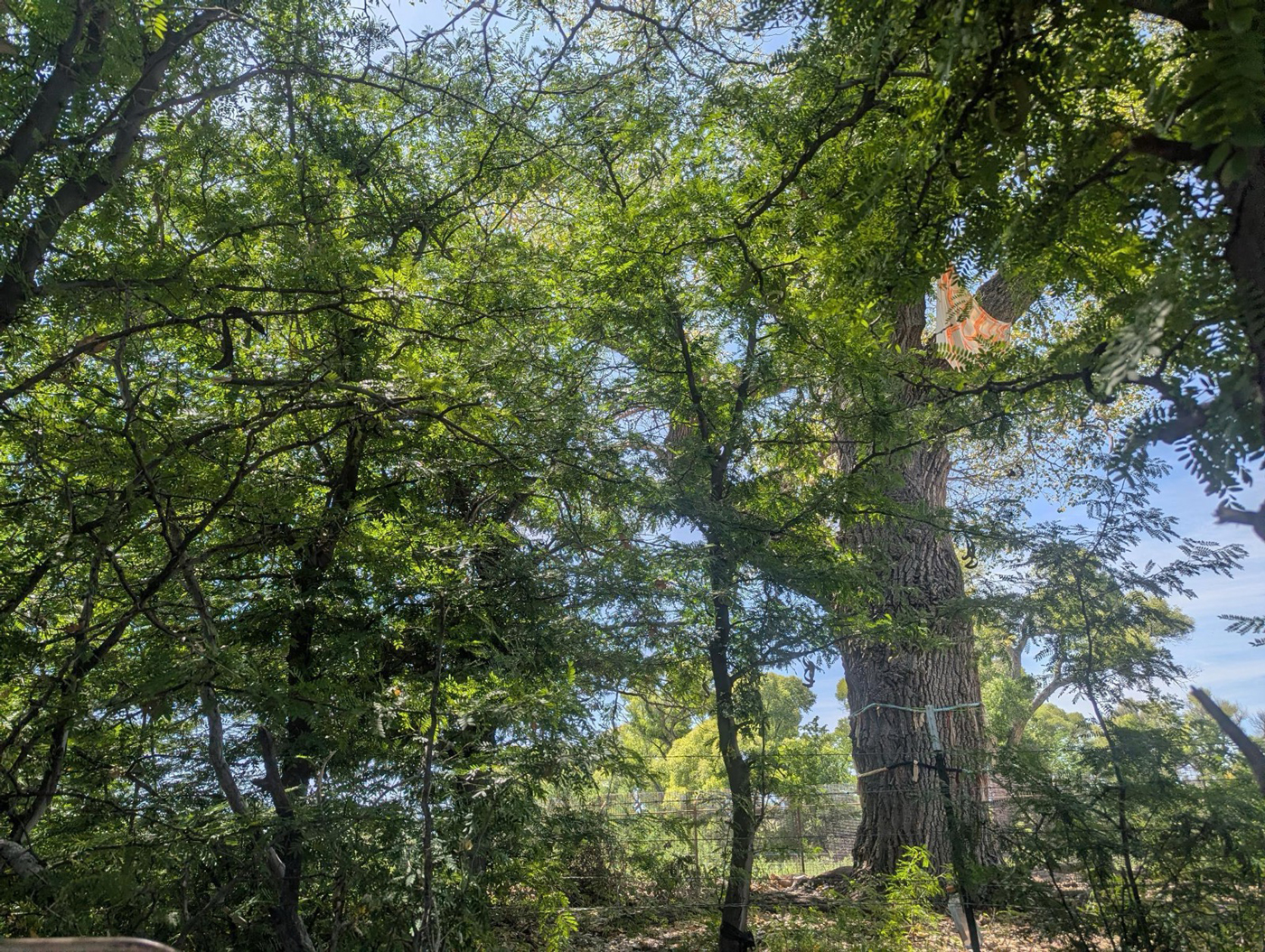
Gathered under the last of four ancient cottonwoods in the path of the new double border wall construction, we have found a moment of possibility. For now, we have managed to stop the regime in its tracks. The wall cannot be built where this grandmother stands so long as we, too, stand here.
For over a year, environmentalists and local community members have been spending time together in Lochiel, Arizona. This town is all but abandoned. Many buildings here are becoming ruins, illustrating Lochiel’s peripheral relationship to the metropolis just a few hours to the northwest. These gatherings have built a compassionate and cohesive network that stretches far beyond the roads, buildings, fences, livestock, and ecology of the valley in which Lochiel is located. A few individuals have brought together many people to witness the splitting of this valley, and our world, apart.
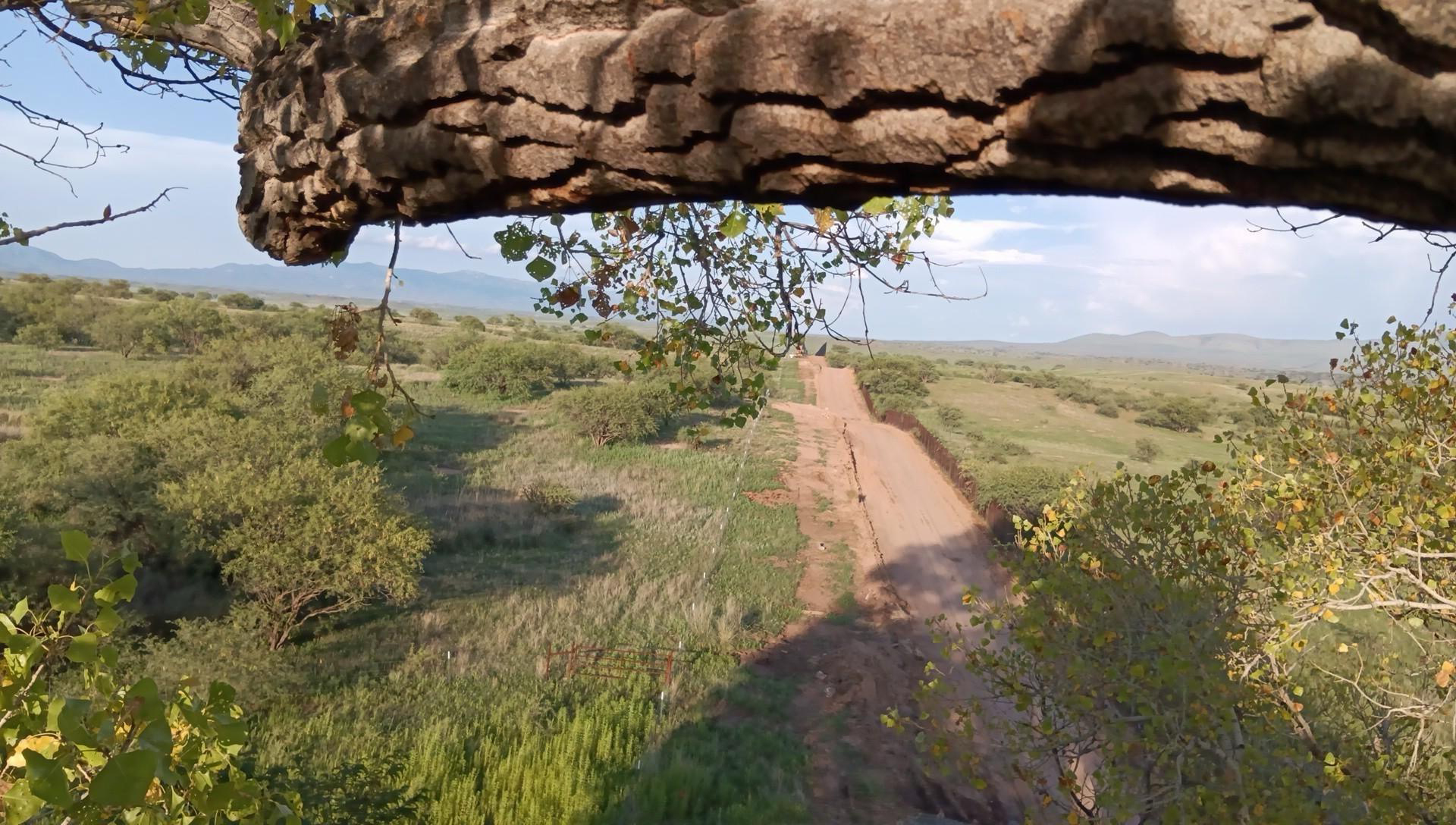
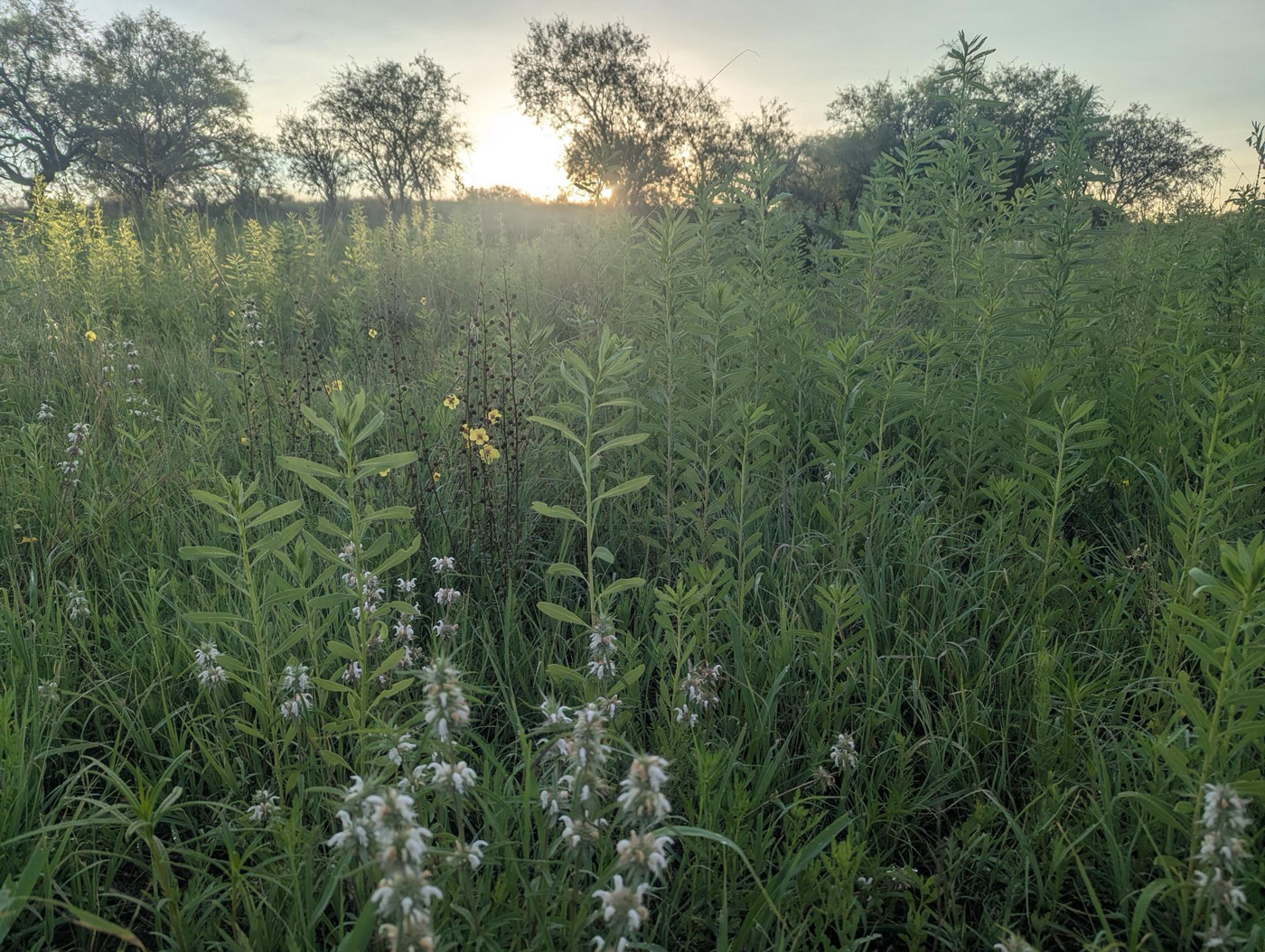
Lochiel sits directly adjacent to the US-Mexico border. One of the houses in the town, the old customs house for the now-closed port of entry, butts up so close to the border that the owner was concerned that it too would be demolished to make room for the double wall. People on both sides of the border fence live much the same way, raising cattle and singing together under the same shade of cottonwoods in the same valley, under the same bright blue dome of the sky. The many very old cottonwoods at the bottom of this valley used to reach across the border, creating a continuous canopy over the road. This high-elevation prairie ecosystem is one of the most biologically diverse in the world, with countless varieties of insects and grasses, flowering plants, and many threatened bird species along with coatis, coyotes, bears, and jaguars. All of this life is at risk here.
A few years ago, in the fall and early winter of 2022, in the Coronado National Forest, which lies east of Lochiel, a similar composition of people resisted another attempt to build a border wall. This effort to block then-governor Doug Ducey’s container wall was ultimately successful. The participants employed much the same rhetoric and similar tactics.
Yet today, the political climate has changed dramatically. In 2022, during the Biden years, Governor Ducey broke many laws to use shipping containers to “fill the gaps” left by Trump’s first ineffectual effort to build the wall he had promised his voters. Miles and miles of national forest—where the state government does not have jurisdiction—were clear-cut and graded without any permits or concern for the law or the environment. The project cost millions of dollars and inflicted untold impacts on this precious ecosystem.
With protesters standing in front of the vehicles doing this construction, crews were forced to work through the night. Protesters responded by setting up a camp in the border road itself. But at that time, Ducey was only tacitly supported by the United States government. After two weeks of occupation, the courts finally moved to intervene. Ducey was stopped not only by blockaders, but by the authority of federal law.
Today, in Lochiel, there is no lawsuit, no salvation from the courts to wait on. This wall, which is no less monstrous than that one, has been engineered for its purpose, and the law has been re-engineered as well. Under Trump’s second term, what was recently mere illegal buffoonery has become a blunt force supported by the law. All of us in Lochiel now, regardless of ideology, see that the power consolidated in the last four years indicates the state’s absolute disregard for life of all kinds. We are fighting for life. The state brings only death.
A few hours west of Lochiel, in a place called Quitobaquito Springs or A’al Vaipia by the O’odham people, Indigenous communities and environmentalists are also preparing for struggle against imminent border wall construction. The springs are a sacred ceremonial site for the O’odham people, some of whom lived there until the 1950s, when the national parks service annexed the land to form Organ Pipe Cactus National Monument.
This spring relies on ancient aquifers that the construction will likely deplete to such an extent that the spring will cease to exist. This desecration is an existential threat to the O’odham people’s traditional religious geography; it also spells extinction for wild populations of Sonoyta pupfish and springsnails, which can only be found in the waters of A’al Vaipia. Resistance is mounting in the form of O’odham-led prayer runs and endangered species lawsuits, among other efforts, but the sense of doom is growing as surveyors arrive and construction crews make preparations.
Adjacent to Organ Pipe Cactus National Monument is Tohono O’odham Nation. The US border has divided O’odham land since the initial process of colonization. The government of Tohono O’odham Nation recently released an announcement declaring all border wall contractors trespassers. “No Trespassing” signs are being placed to notify contractors of their illegal entry of the land. The border has already desecrated O’odham land, and this wall would destroy sacred sites and make connection across the border even harder than it is already.
Before, a construction project would have been compelled to address these issues, but the Real ID act has freed the government of the responsibility to conduct archeological and environmental studies. The border wall is materially dissolving all history, life, and culture that could get in its way.
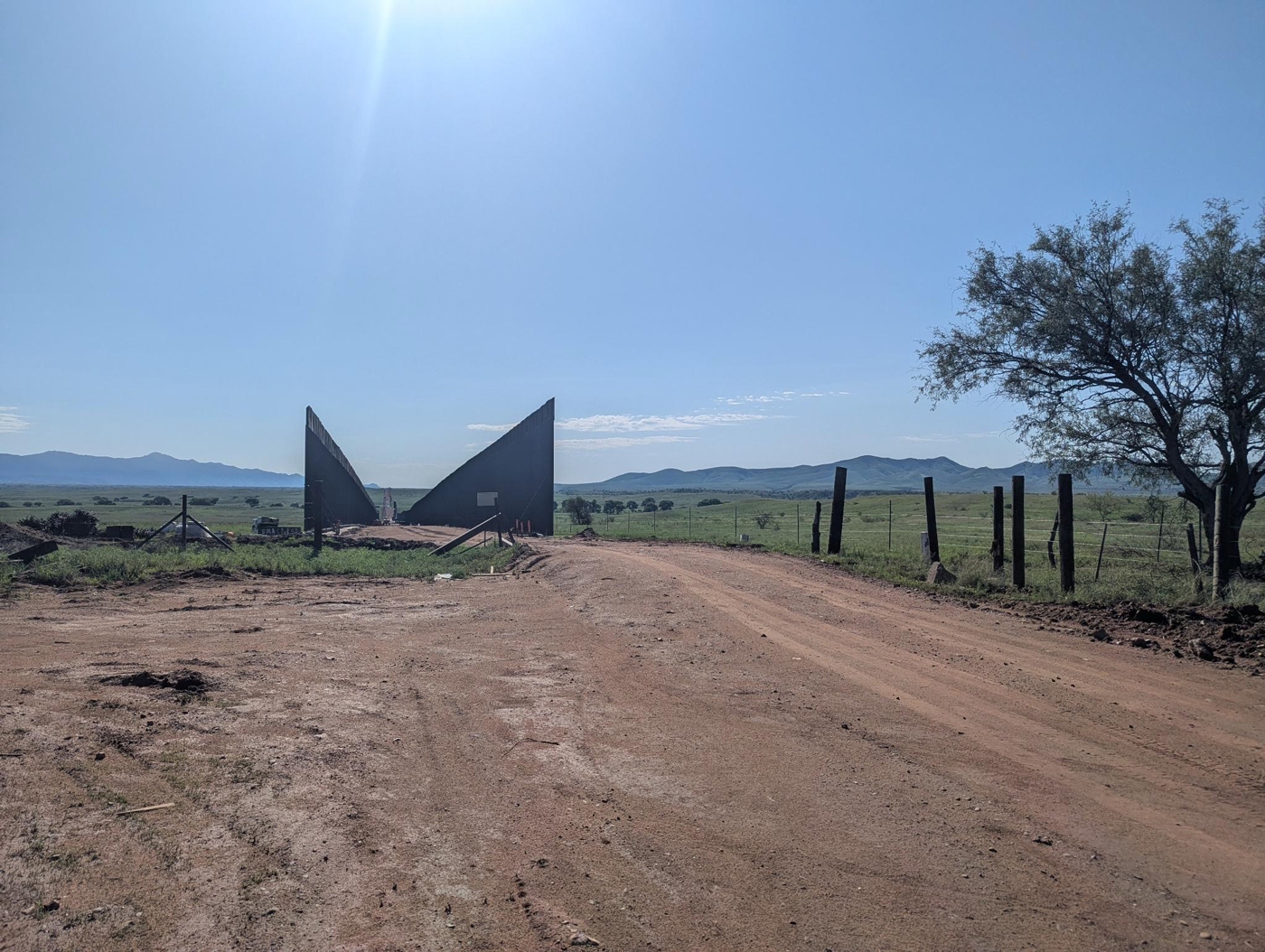
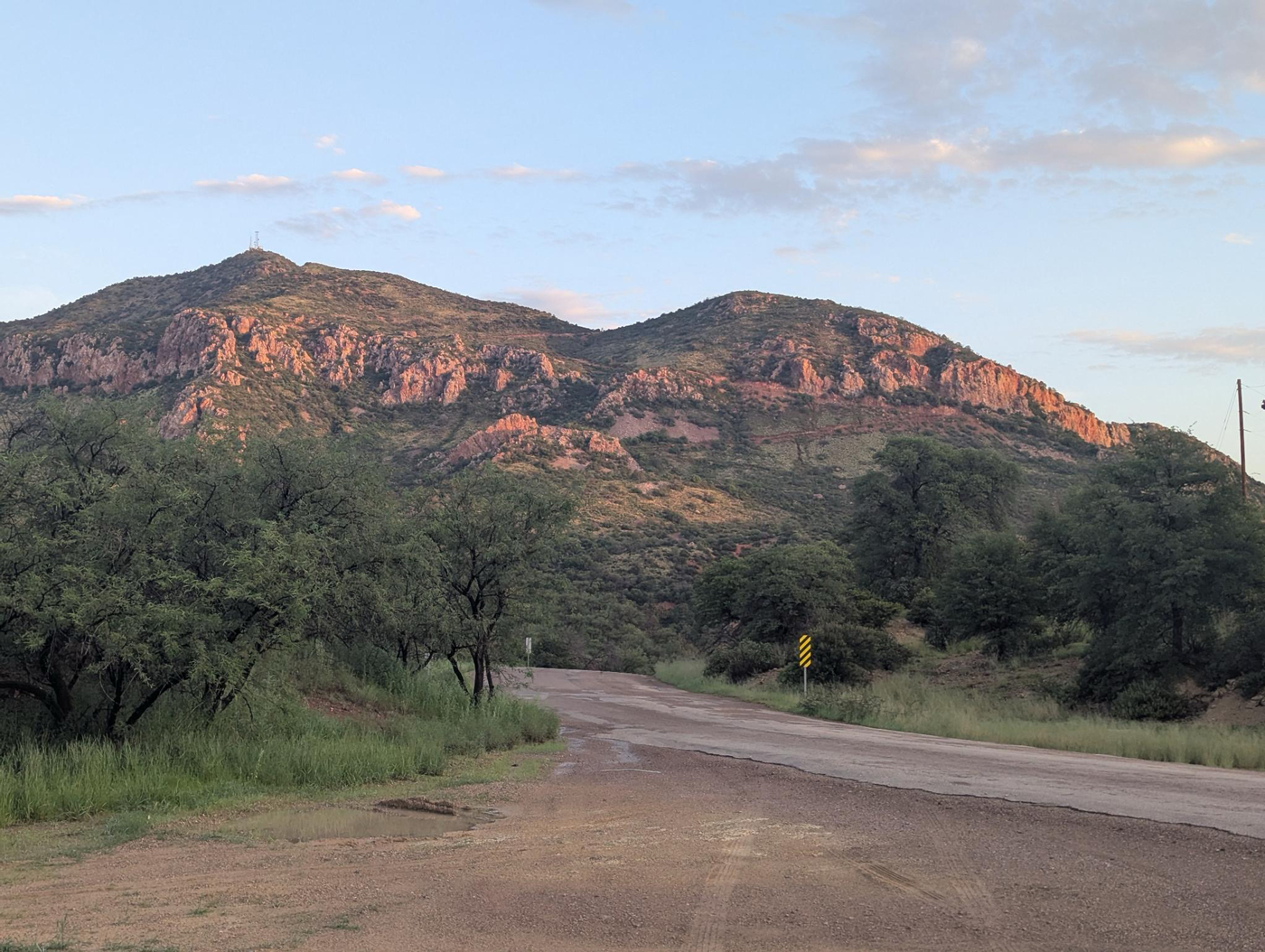
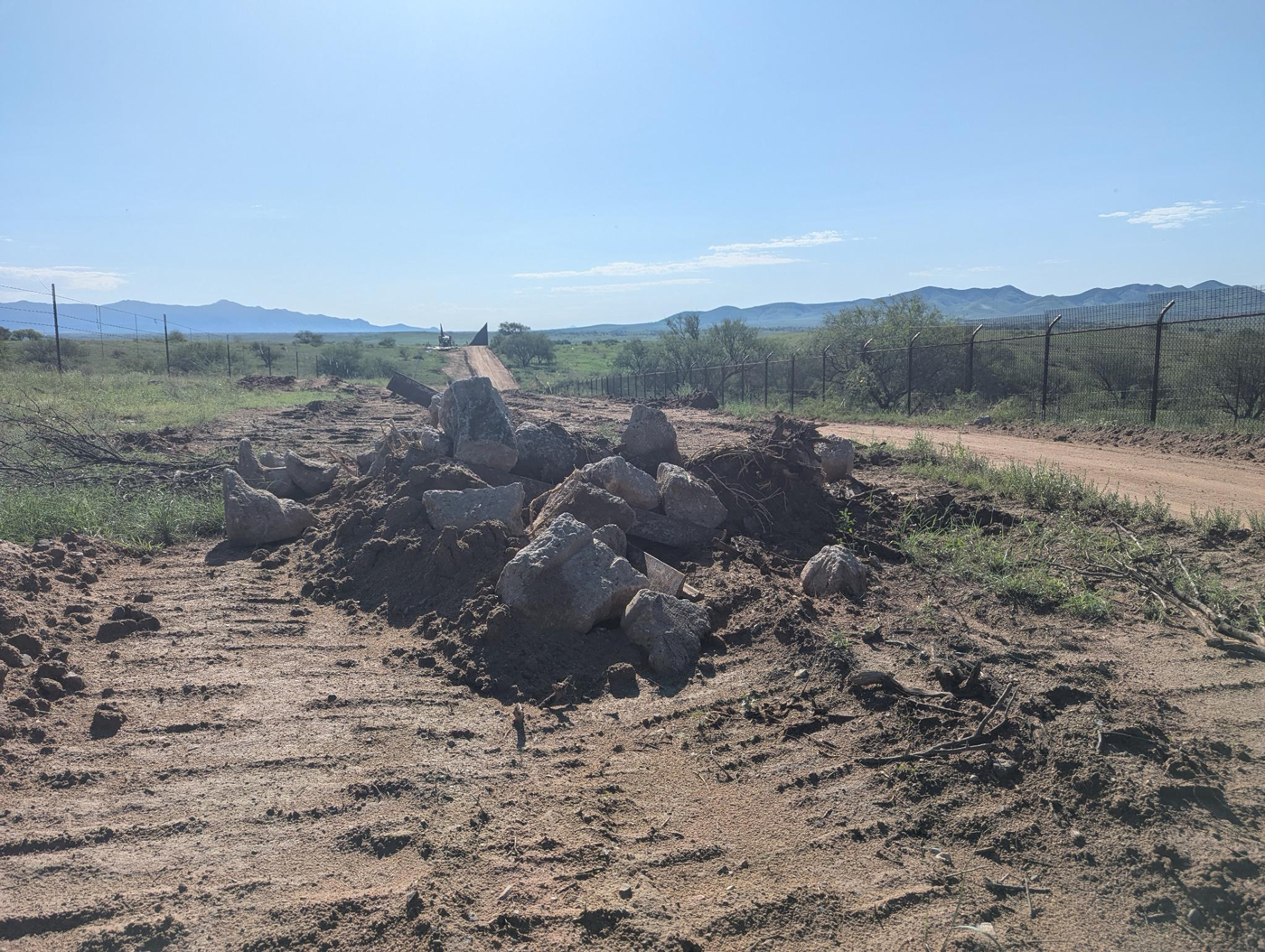
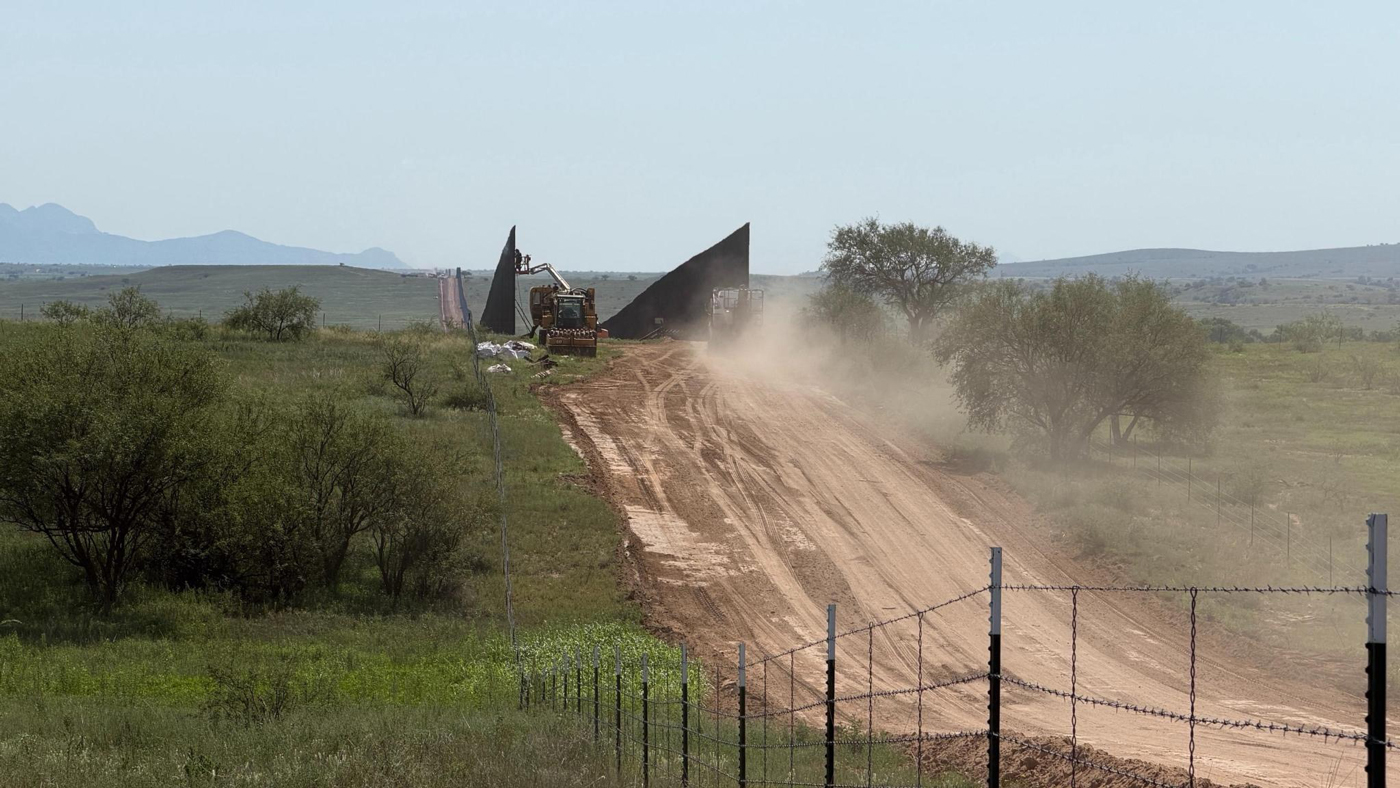
As I write, the fence that marks the border near Lochiel is being removed, panel by panel. I watch as the same machine that tore up three ancient cottonwoods in this valley carefully stacks up the fence panels.
In a collective daydream encouraged by the heat of the sun, we imagined that this could the last time the valley will be divided by violence. That the valley could one day become whole again. That the mythology of the state might give way to land, sun, soil, abundance, freedom.
This daydream ended as quickly as it started. The double wall now reaches almost to the edges of the roots of the fourth grandmother cottonwood that has been marked for death to make way for this monstrous infrastructure. Dust clouds from construction billow over her leaves as her roots are crushed by countless trucks and drowned by water stolen from the aquifer below in an attempt to keep the disturbed soil on the ground.
On Monday, July 27, a local person decided to stand in front of the machinery that is supposed to take this last of four border trees out of its soil and all of our lives. For this act of care, he was arrested by Santa Cruz County Sheriff Hathaway’s deputies and put in jail for the day. He was released without any charges being filed. This act of bravery resounded in southern Arizona.
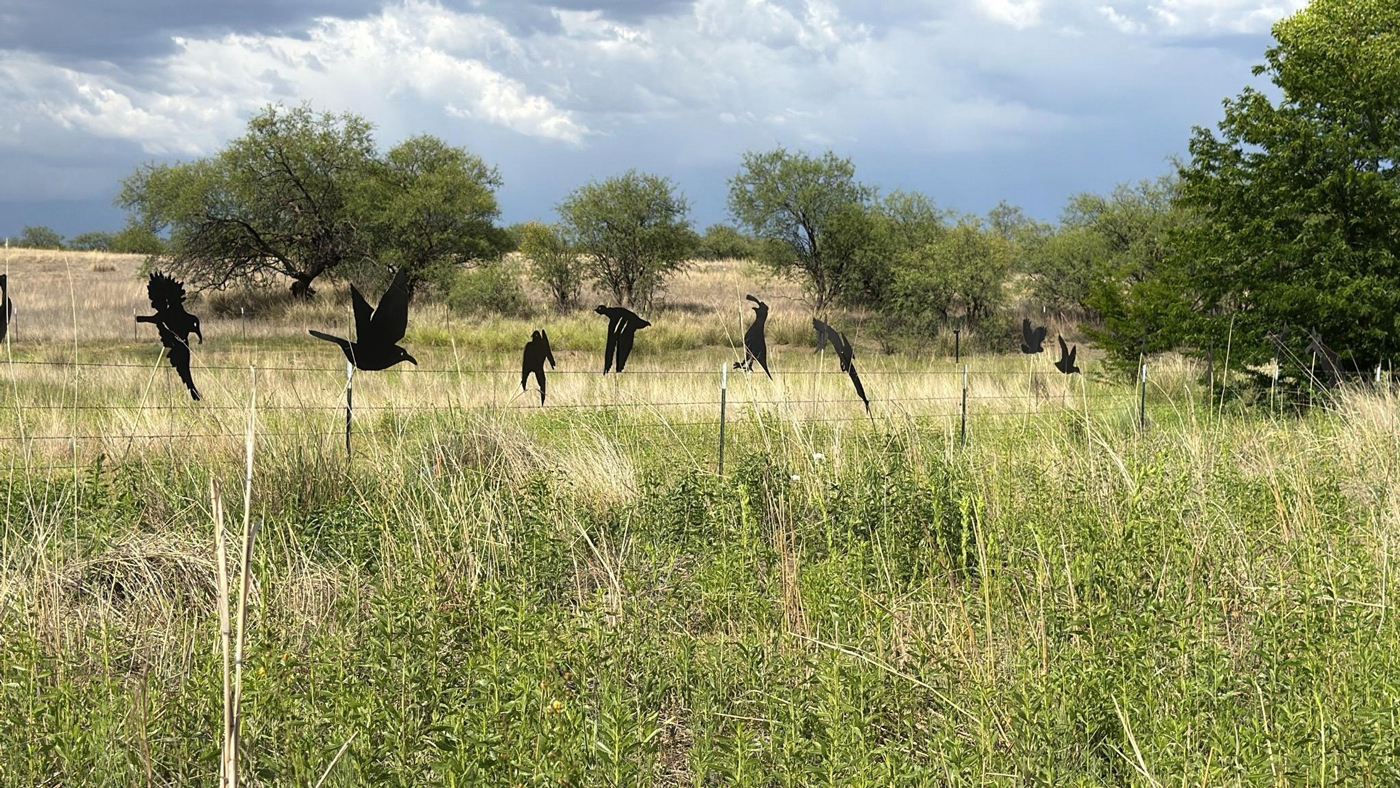
As the news spread, many more people turned towards this small town with their hearts and minds alight. A window opened into the possibility of stopping the construction of the wall and properly grieving the ecosystem that is being split in two. Journalists, environmental NGOs, humanitarians, and anarchists flooded into the small town in response to this invitation.
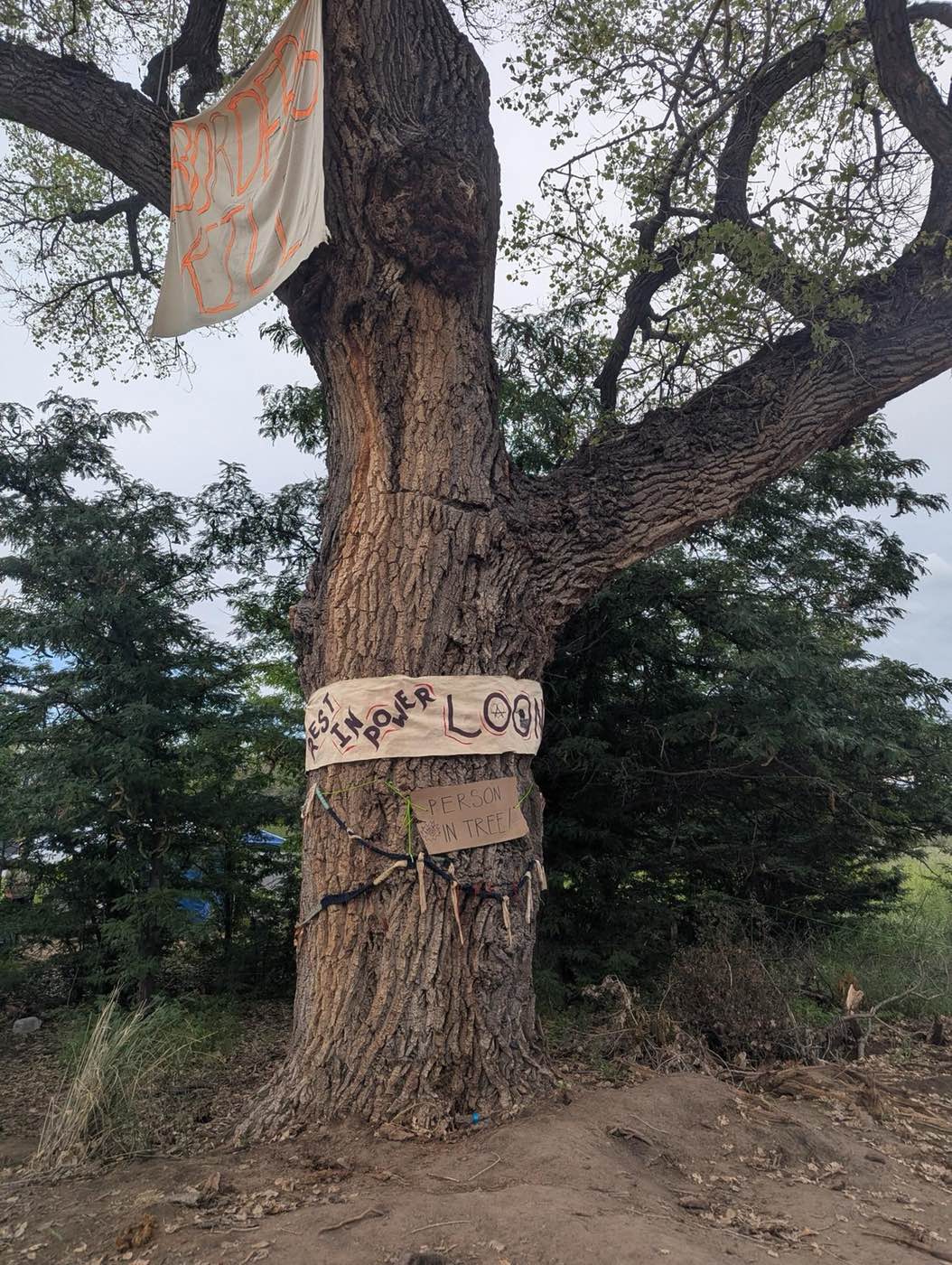
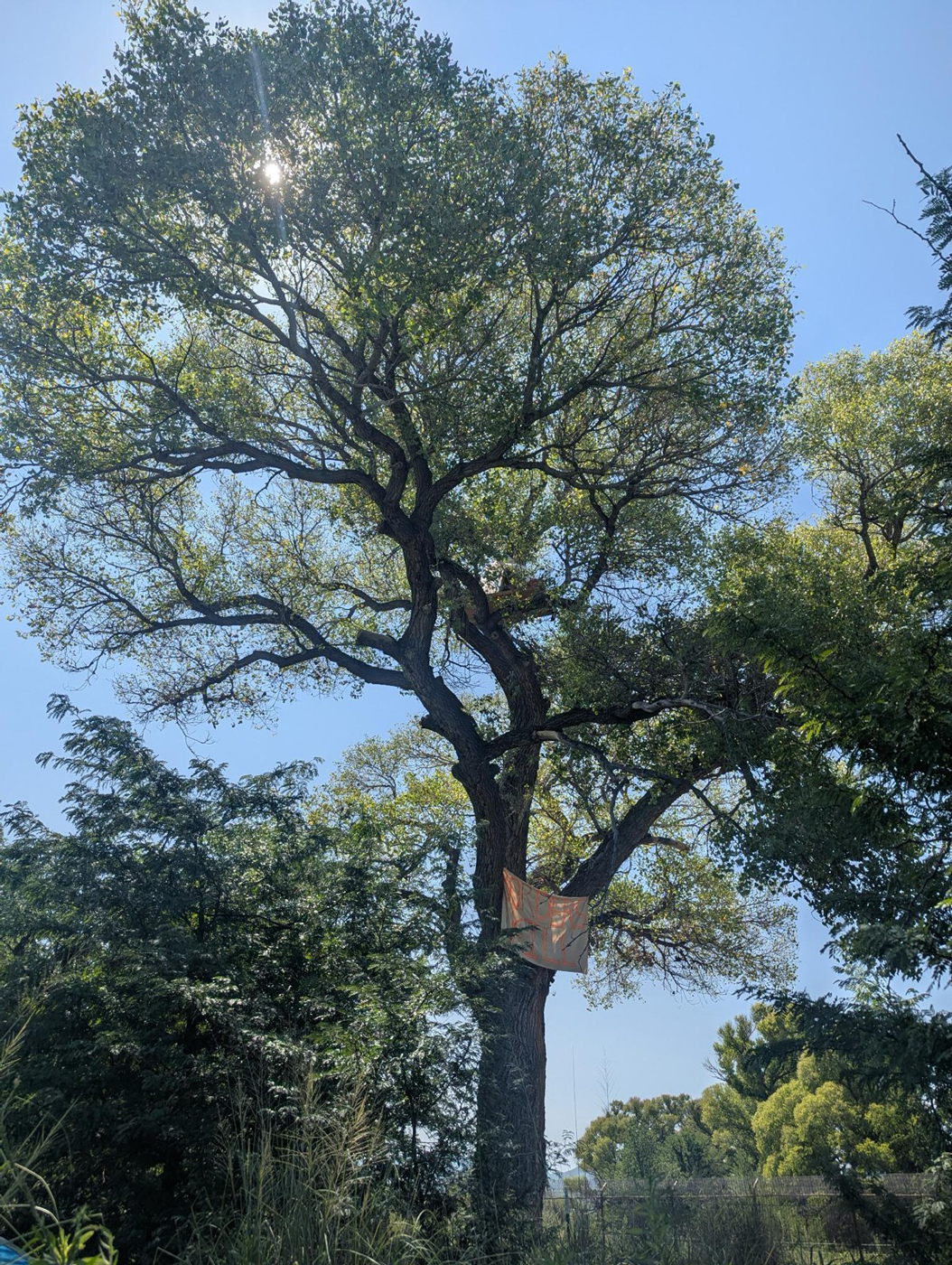
In less than two days, the network spread its roots far enough that it was possible to establish a tree sit in the arms of that last of four grandmothers. People rigged a platform in the top of the tree and raised a banner.
Old cottonwoods are huge—and fragile. At any moment, any limb could drop without warning; the stress that this tree is enduring only makes that more likely. But that risk is worth it to the tree sitter and those supporting from below. This moment of freedom is worth the risk.
The tree sit is both a symbol and an intervention. It draws on the activists’ experience with historic forest defense tactics and environmental militancy—and on a commitment to the more-than-human world. The tree sit in this particular place has done what few other tactics have been able to, completely halting the progression of the border wall construction in this small part of the San Rafael Valley. On three sides of the tree, construction is continuing, but still she stands with one of us held in her wide arms.
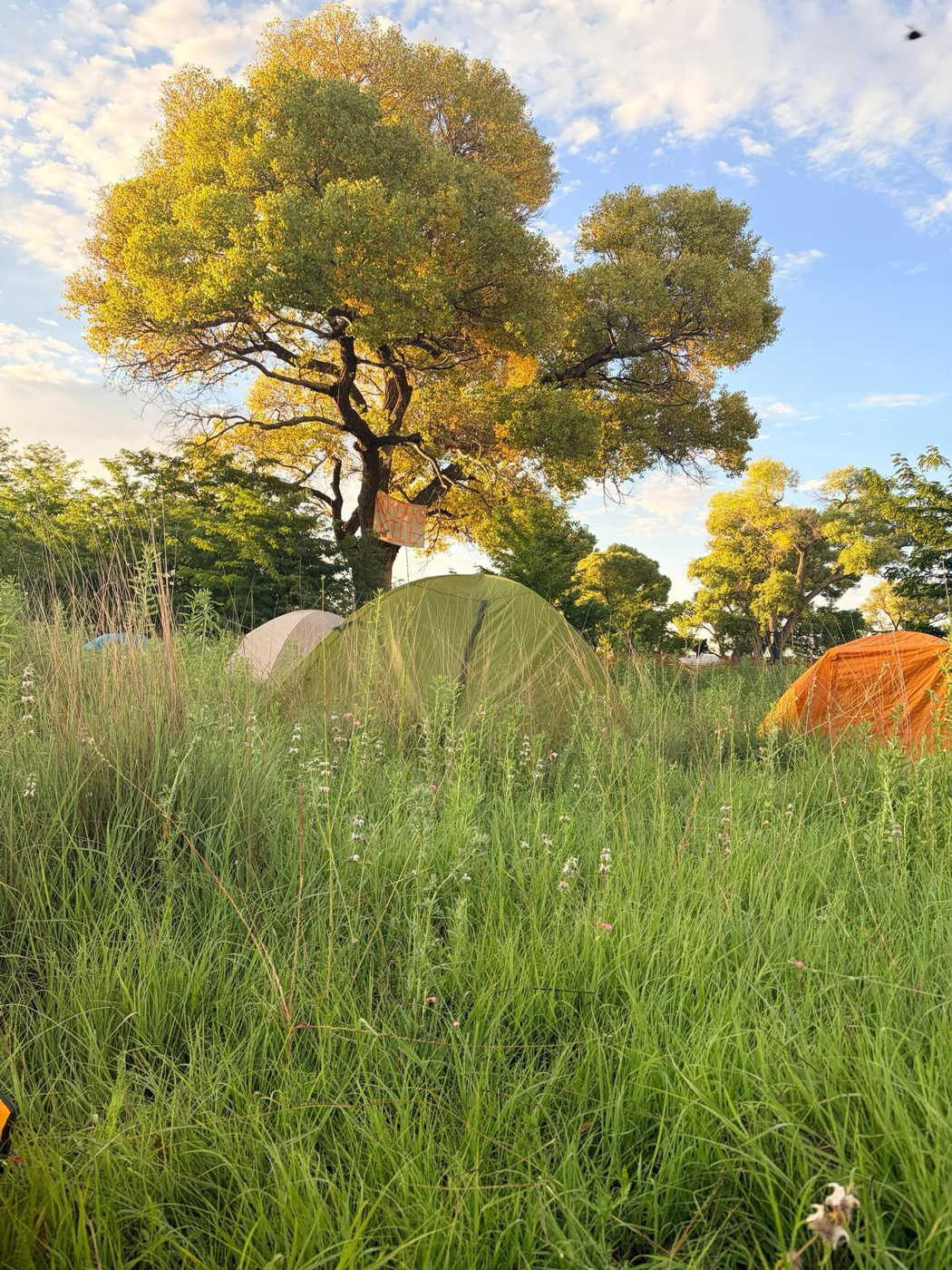
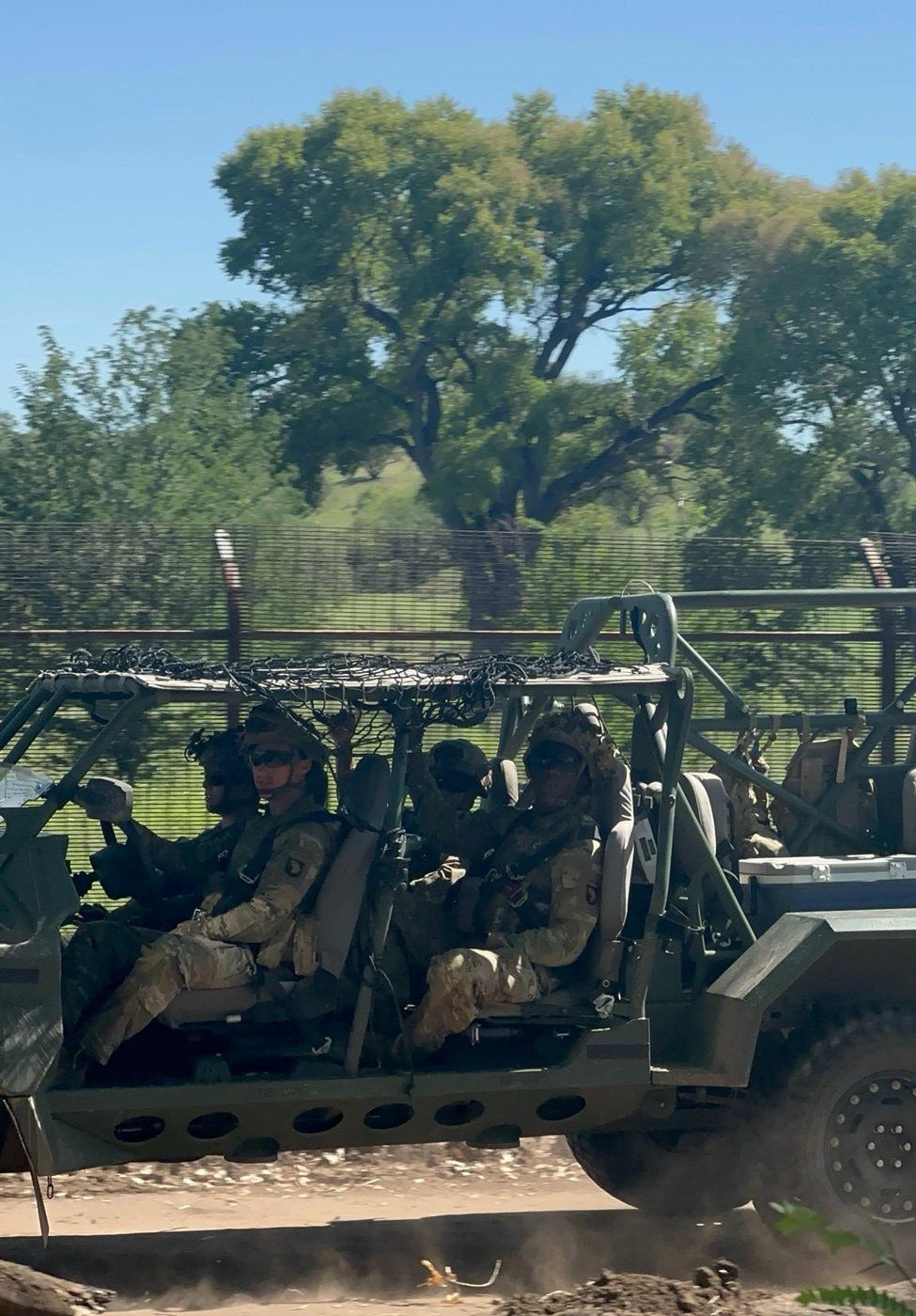
Just after the sit went up, the sheriff was called once again. An employee of a private security firm called Vision Quest attempted to intimidate the sitter and the camp that blossomed under the tree. The sheriff did not come. We are told that he is also against the building of this wall. That day, it appeared that there was nothing that the private security guards, border patrol, or even the marines stationed at this part of the border driving back and forth in a golf cart could do to us without the sheriff’s cooperation—at least legally, at least for now. Once we realized this, we walked the border road easement without fear.
In the two weeks since then, construction nearby has been largely disrupted due to people’s commitment to standing in the way as well as the miraculously full and regular monsoon season that has made the San Rafael valley so lush this year. The summer rain still falls here, unlike in Phoenix and Tucson. Lightning, downpours, and high winds have blessed us with breathing space in this moment of opportunity.
No one knows what to do with us. While I can still feel the sun on my skin, the pressure of the heat of summer has lifted. Finally, we can run, play, and learn to defend the world of the real within the small power vacuum that we have created together under this cottonwood. We are at the edge of the false world that we are told we belong to, piercing its thick rubbery skin and feeling the breeze of freedom in the midst of the violence of ever-escalating border fascism. The margins and hinterlands of capital remain places that can offer enough space to move for those of us willing to puncture the illusion of state control.
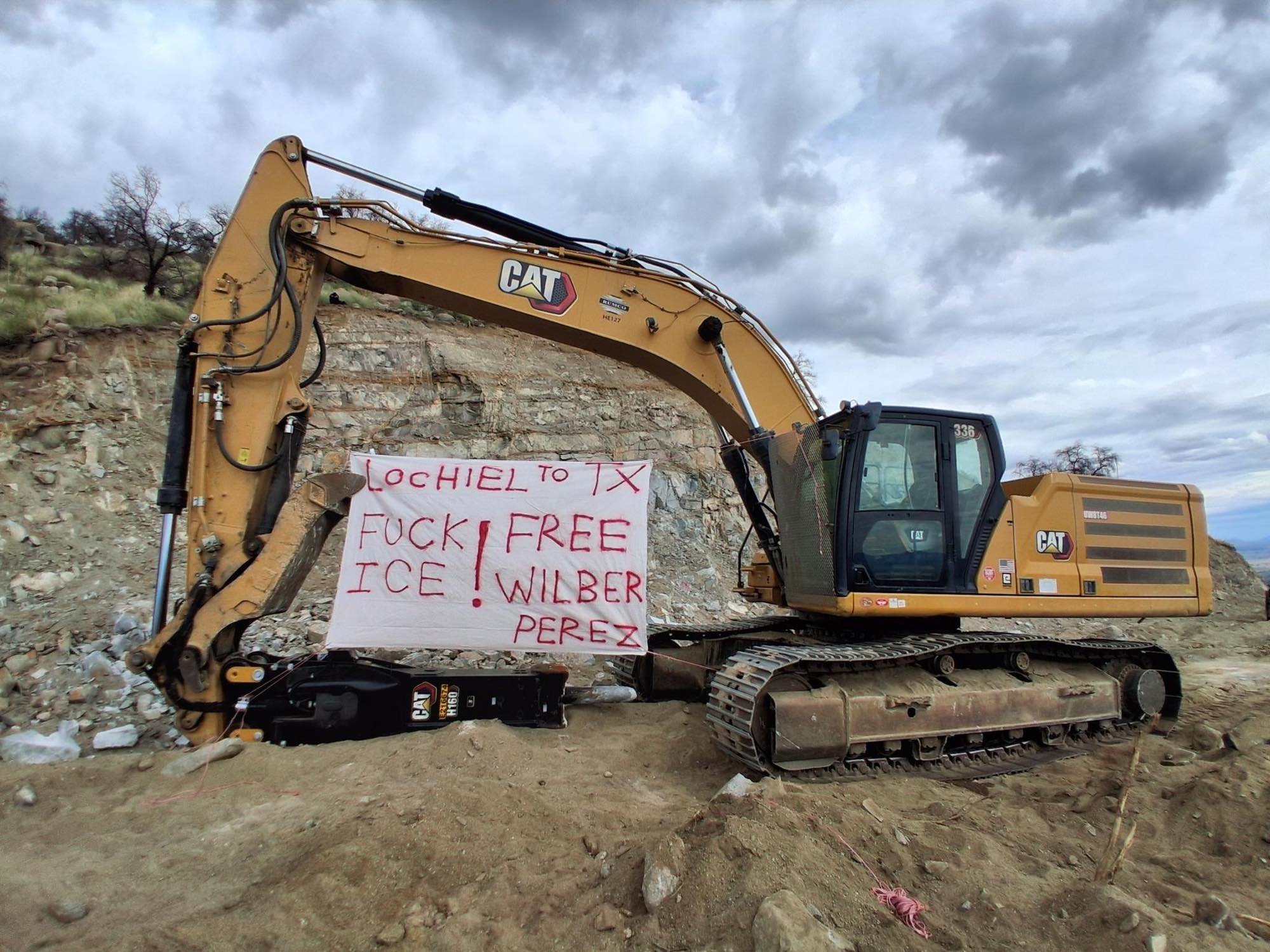
News from the margins quickly reached one of many centers of control. On Wednesday, August 5, we received news from Phoenix that some “anarchists and troublemakers of the metropolis” had carried out an action at the office of the general contractor awarded with the border construction project, Fisher Sand and Gravel. This company has made a billion dollars on the wall construction contract. The “troublemakers” trashed the office and posted a people’s eviction notice on the door, sending a message that just as the border is everywhere, there is a way for anyone to push back against it anywhere.
The reportback from this action, originally posted on a regional noblogs site, begins, “The border is like an open wound,” recalling Anzaldua. There is no truer statement. Everywhere that the border is developed, maintained, and expanded, there is blood. We are only trying to heal this wound.
Much of the mainstream media rhetoric around the tree sit relies on neoliberal understandings of what is possible. If only there were one wall under construction rather than two, these cottonwoods might have been saved. If only the border could be maintained more abstractly, it would seem less violent from afar. If only these cottonwoods could have all been saved, the ecosystem would have stayed intact. If only the construction would be stopped by active nests that Border Patrol stated would prevent the callous removal of the grandmothers standing in the way. The studies abound, and all of it is true. There is irreparable harm being enacted on this ecosystem by the wall and its construction.
On the ground, many people have a simpler outlook. As the banner hanging on the still-standing tree reads, “BORDERS KILL.” We deny any line that divides us. We oppose any force that prevents people, animals, and water from moving and dwelling where they will. We refuse to believe that this wall will stand forever. We know that with our continued refusal, we can tear it down. We know that the roots of these cottonwood trees remain, although torn and slowly decaying, deeper than the wall is anchored by cement into the thick soil of the San Rafael Valley. The cicadas sing with us. They tell us that rain is coming to make the road too muddy for heavy machinery to pass.
In this moment, we do not know how long the tree sitter will be able to remain in the grandmother cottonwood we’ve grown to love. Many leaves have grown yellow and fallen due to the stress, yet there is new growth at the tips of the smallest branches. At any moment, the sheriff may decide that it is time for him to do his job. Perhaps more willing arms of state power will be commanded to remove us.
But we will be here to stop this intervention, to stop the extension of the wall from the Gulf of Mexico to the Pacific Ocean, to stop the real world from being separated by an imaginary line imposed through raw violence. We welcome you to join us here in Lochiel; we invite you into the freedom we have found here, to fight the border where you are. We need you to help us to expand this space of possibility that we feel so clearly in this moment from the margins to the whole world.
We know you can feel it too.